Published on April 9, 2026
SEO Daily Update: April 9, 2026
By Ben Murphy
Look at what Google is doing to your data right now.
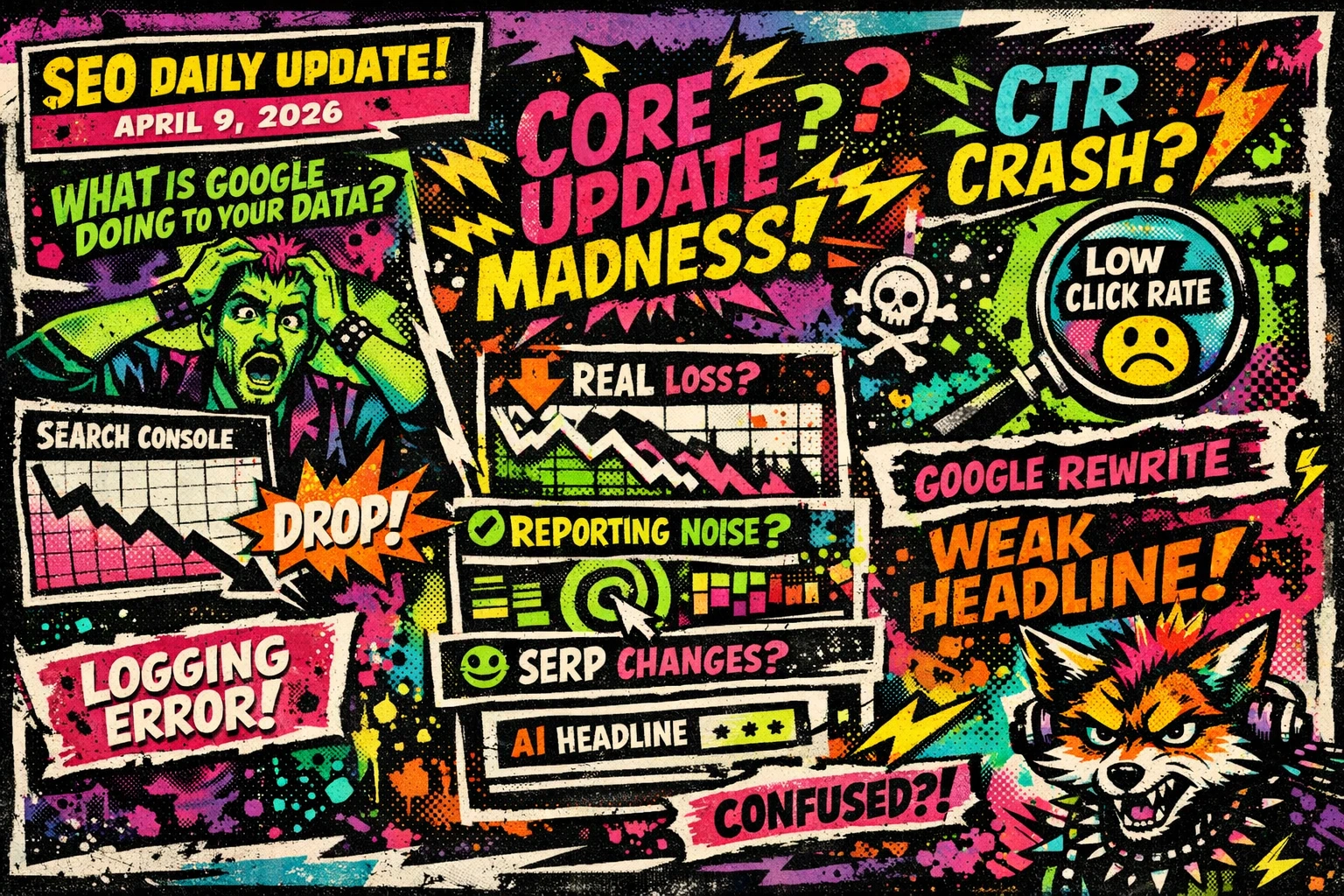
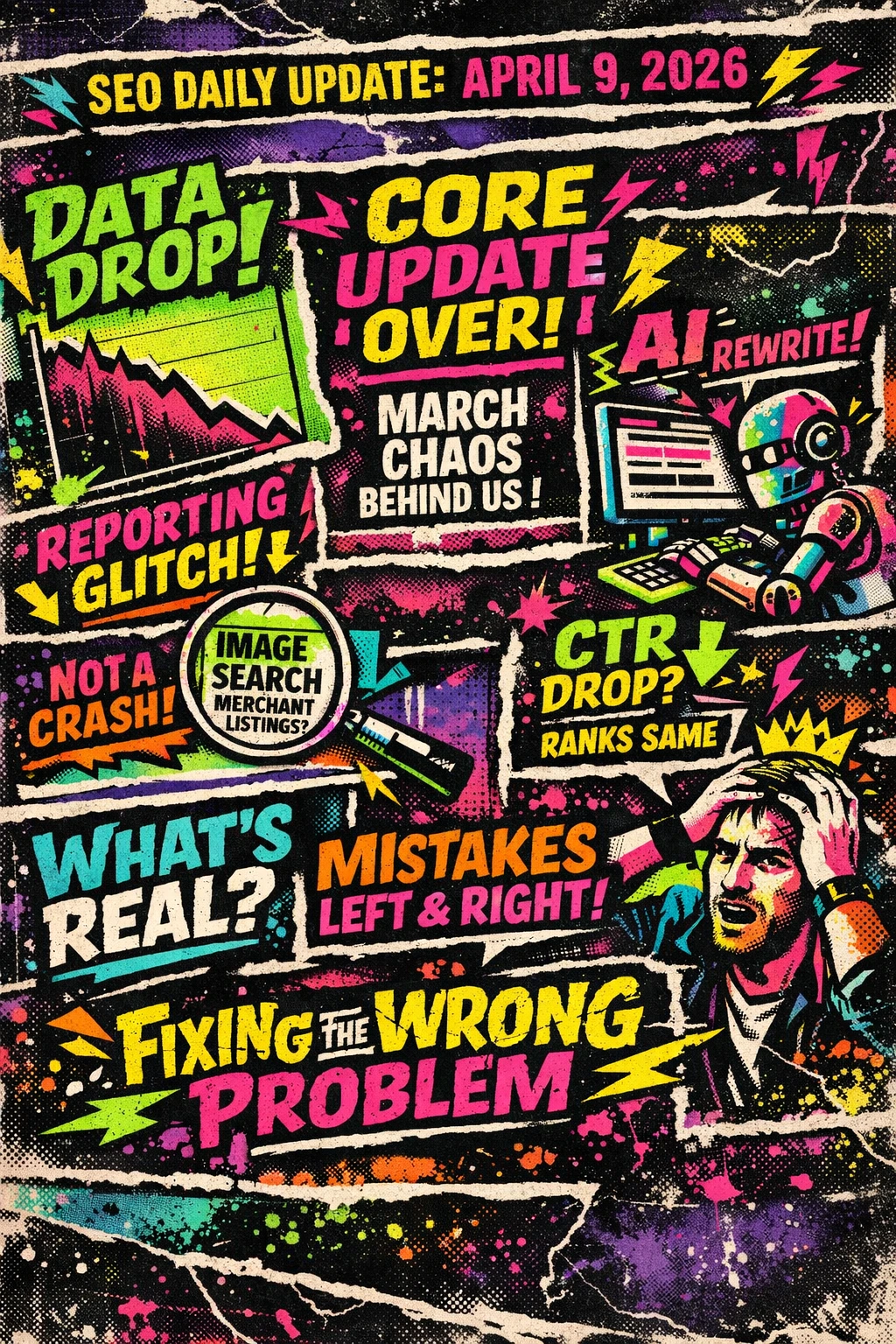
If your Search Console graph has suddenly dropped, do not assume your SEO just fell off a cliff. Google has confirmed it is correcting a long-running impression logging issue, which means some sites are now showing lower impressions even when clicks and rankings have not collapsed. That makes today’s biggest SEO risk misdiagnosis, not just visibility loss.
Action:
Use the Search Appearance filter in Search Console. If the biggest drops are showing in Image Search or Merchant Listings, you are very likely seeing the reporting correction rather than a genuine collapse in search demand. Do not start rewriting pages or cutting content based on a graph that may be correcting itself.
This is where the scene gets messy.
The March 2026 core update is now complete, which means the old excuse of “the rollout is still happening” is gone. From this point forward, businesses need to separate three things clearly: real post-update losses, Core Update Drift, Search Console reporting noise, and traffic changes caused by how Google is presenting results.
Action:
Now that the rollout is over, the baseline is set. Compare performance from March 1–20 against April 10 onwards. Ignore most of the volatility in between. That was the storm. What matters now is what stayed weaker after it passed.
Now look at the SERP itself.
Google is still testing AI-written headline rewrites in Search. That means your page can keep the same ranking while Google changes the words users actually see before they click. So even when a position holds, presentation can still move against you.
Action:
Check your CTR, not just your ranking. If Google has rewritten your headline into something weaker or more generic, your CTR can drop without any ranking loss. That is a presentation penalty. Rewrite your H1S and title tags so they are specific enough that Google has less reason to touch them.
PunkFox Take
Today’s problem is not just volatility; it is confusing.
A business can look at Search Console, see impressions dropping, assume the core update hit them, and start changing the wrong things. At the same time, Google may be rewriting their headline, changing how the result is framed, and reducing click demand before the position even moves.
That is why old SEO reporting is starting to fail.
You are not just tracking rankings anymore. You are tracking data corrections, presentation shifts, and real visibility changes all at once.
If you cannot separate those three, you will end up fixing the wrong problem.