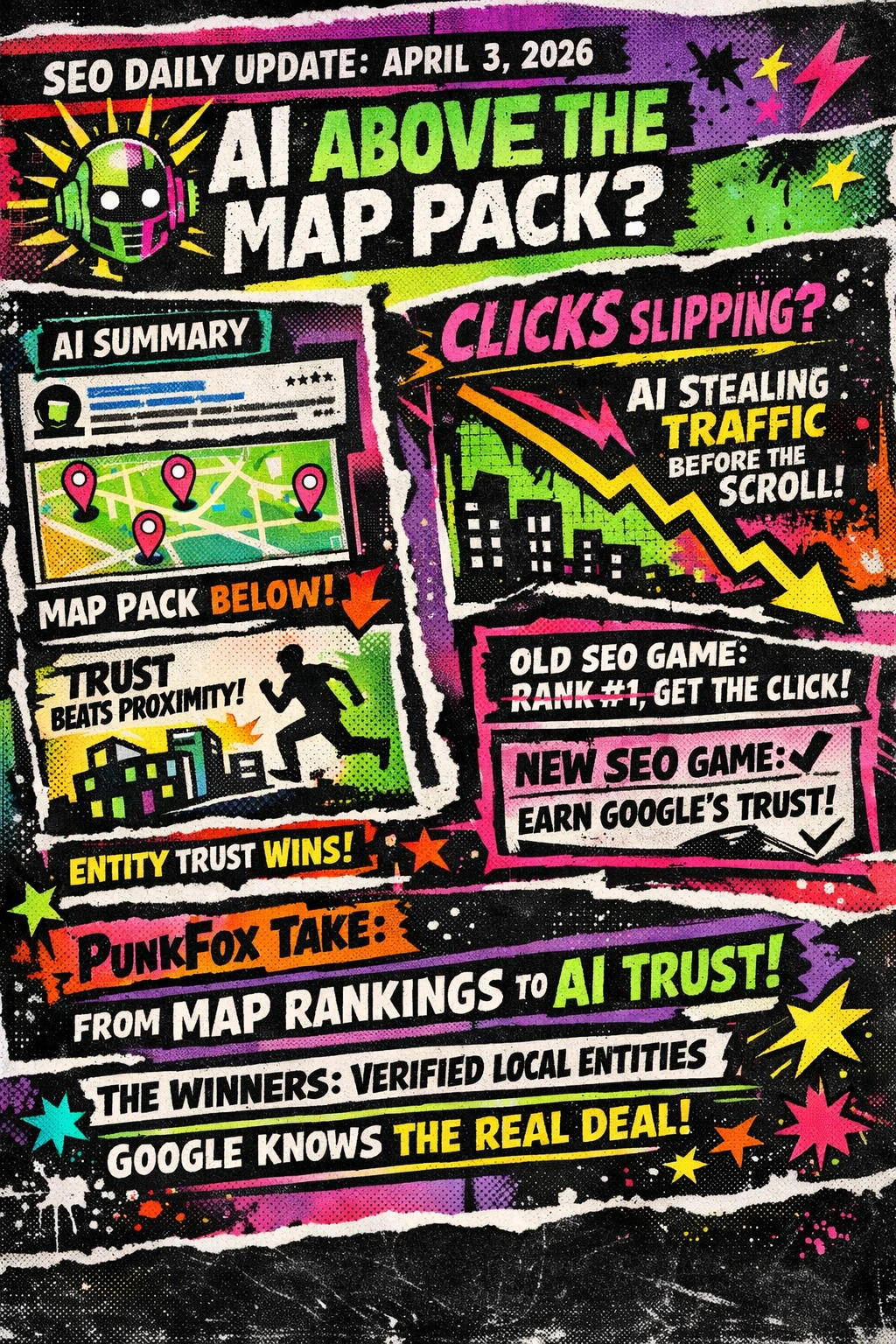
Local SEO is shifting from proximity to entity trust
Traditional local signals still matter, but they are now being layered with broader trust markers across your website, Google Business Profile, and external mentions. A business 2km away with weak entity trust can now lose to a business 5km away that Google’s AI can actually verify and explain.
Action:
Audit your business data for consistency. If your website says you service all of Perth, but your Google Business Profile is tightly locked to Joondalup, Google sees a conflict, not a strong local entity.
Stable rankings do not guarantee stable traffic.
One of the clearest shifts in 2026 is that rankings can stay relatively flat while clicks decline. AI answers, local summaries, and richer SERP framing are reducing the number of users who need to scroll into traditional results, even when your business still appears there.
Action:
Track clicks, impressions, and query intent together. If visibility looks stable but traffic is slipping, the problem may not be rankings. It may be that Google is answering the query before users ever reach you.
PunkFox Take
The old local SEO model was simple. Rank in the Map Pack, earn the click, win the lead.
That model is getting weaker.
Google is increasingly deciding who gets trusted before it decides who gets clicked. Most agencies are still chasing pins on a map. We are building digital entities that Google’s AI is willing to vouch for.
The businesses that win next will not just rank locally.
They will be the ones Google feels confident enough to explain.
For a deeper breakdown, read our full article on why ranking #1 in the Map Pack no longer guarantees traffic.