Published on May 4, 2026
SEO Daily Update: May 4, 2026
By Ben Murphy
Google Is Becoming More Selective About What And Who It Shows Again
Today’s strongest search updates all point in the same direction. Google seems to be getting more selective at two levels at once: first in what stays visible in search at all, and second in which sources users are encouraged to see more often. The clearest signal is fresh industry discussion that Google may be deindexing URLs more aggressively, alongside Google’s expansion of Preferred Sources to all supported languages and new Discover labelling that leans further into repeat preference and reinforcement.
Google may be getting more aggressive with deindexing.
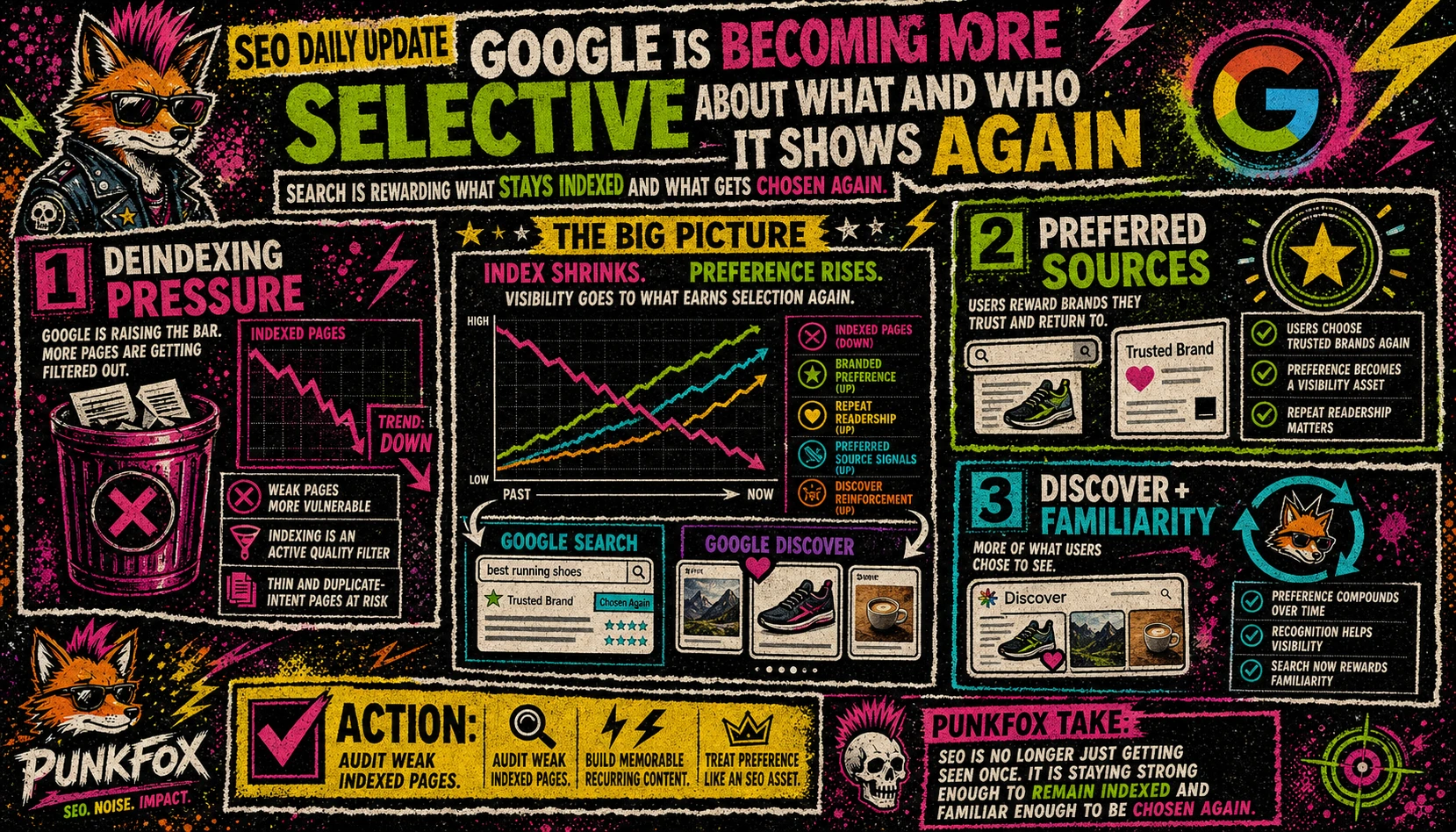
Barry Schwartz reported fresh SEO community discussion suggesting Google may now be dropping URLs from the index at a higher rate than before. This is not a confirmed algorithm announcement from Google, but it is the kind of pattern experienced SEOs tend to notice before there is any official explanation. The wider implication is that indexing is looking less like a passive technical outcome and more like an active quality filter.
That matters because many websites still treat indexation as the default state. If Google is becoming choosier, then weak service variations, thin location pages, duplicate-intent articles, and low-value support content may be more vulnerable even when they are technically crawlable. This fits the broader direction of travel in search, where quality thresholds are being applied earlier in the process rather than only after ranking.
Action:
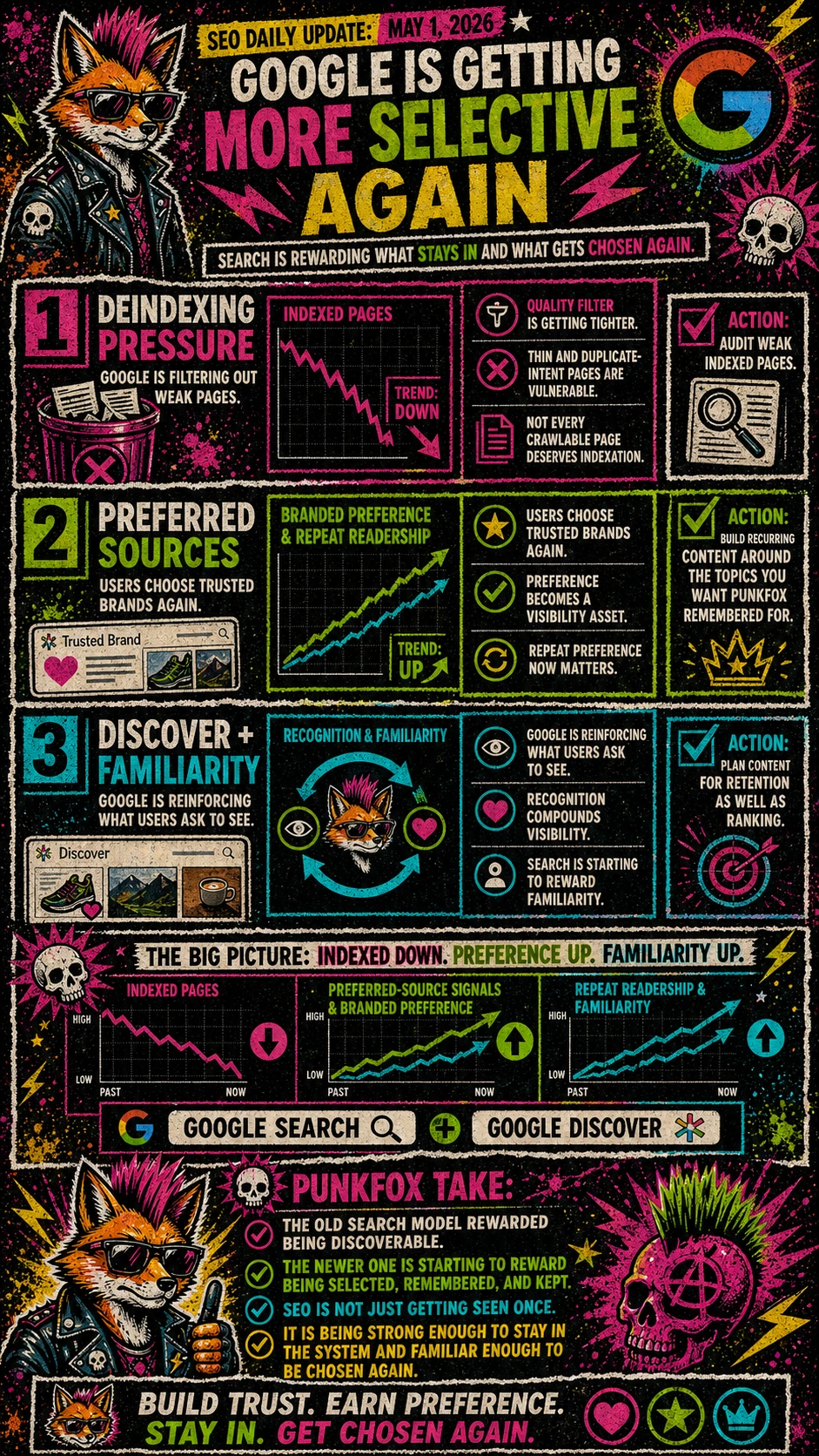
Review which page types actually deserve to remain indexed. If a page has not earned a meaningful human visit, generated a lead, or shown signs of real crawl value in the last 90 days, it is worth questioning whether it should stay live in its current form. Weak pages do not just sit there anymore. They can dilute the parts of the site that actually matter.
Preferred Sources is making brand preference a more visible part of search.
Google’s Preferred Sources feature has now expanded to all supported languages globally. Google says readers are twice as likely to click through to a site after marking it as a Preferred Source, and over 200,000 unique sites have already been selected. Search coverage around the rollout also frames this as a meaningful visibility signal for publishers rather than a small UX tweak.
What makes this important is not just the feature itself. It is what the feature says about where search is heading. Google is openly giving users more ways to reinforce the brands and publishers they already know, which means memorability, trust, and repeat preference are becoming more valuable alongside raw discoverability. For brands publishing regular content, that is a strong reminder that being chosen again is now part of SEO, not separate from it.
Action:
Treat preference like an SEO asset. Do not just publish broadly about SEO. Build recurring content around the topics you want PunkFox to be remembered for, whether that is Perth SEO infrastructure, AI visibility, technical cleanup, or local search strategy. The tighter the association, the easier it is for users and search systems to choose you again.
Google Discover is also reinforcing the same pattern.
A new Discover label, “You asked to see”, appears to make user preference more explicit in the feed experience. That is a small interface change, but it supports the same broader story as Preferred Sources: Google is becoming more comfortable showing users more of what they have already signalled they want, rather than acting only as a neutral discovery layer.
For SEO teams, this is useful because it sharpens the strategic choice. If search and Discover are both leaning harder into preference, then brand-building, audience loyalty, and topical familiarity are not side benefits anymore. They are increasingly part of how visibility compounds over time. The sites that benefit most from this kind of shift are usually the ones that publish consistently, look recognisable, and make it easy for users to choose them again.
Action:
Look at your content strategy through a retention lens as well as a ranking lens. Ask which topics, formats, and recurring themes make a reader more likely to remember your brand and come back to it. Search is no longer just rewarding discoverability. It is starting to reward familiarity.
Website analytics visual showing indexed pages declining while branded preference, repeat readership, and preferred-source signals grow across Google Search and Discover.
PunkFox Take
The old search model rewarded being discoverable.
The newer one is starting to reward being selected, remembered, and kept.
If Google is becoming more selective about what it indexes and more willing to amplify the sources users already prefer, then SEO is no longer just a game of getting seen once.
It is becoming a game of being strong enough to stay in the system and familiar enough to be chosen again.