Published on May 19, 2026
SEO Daily Update: May 9, 2026
By Ben Murphy
Google Is Cutting Old SEO Shortcuts While Making Source Credibility More Visible
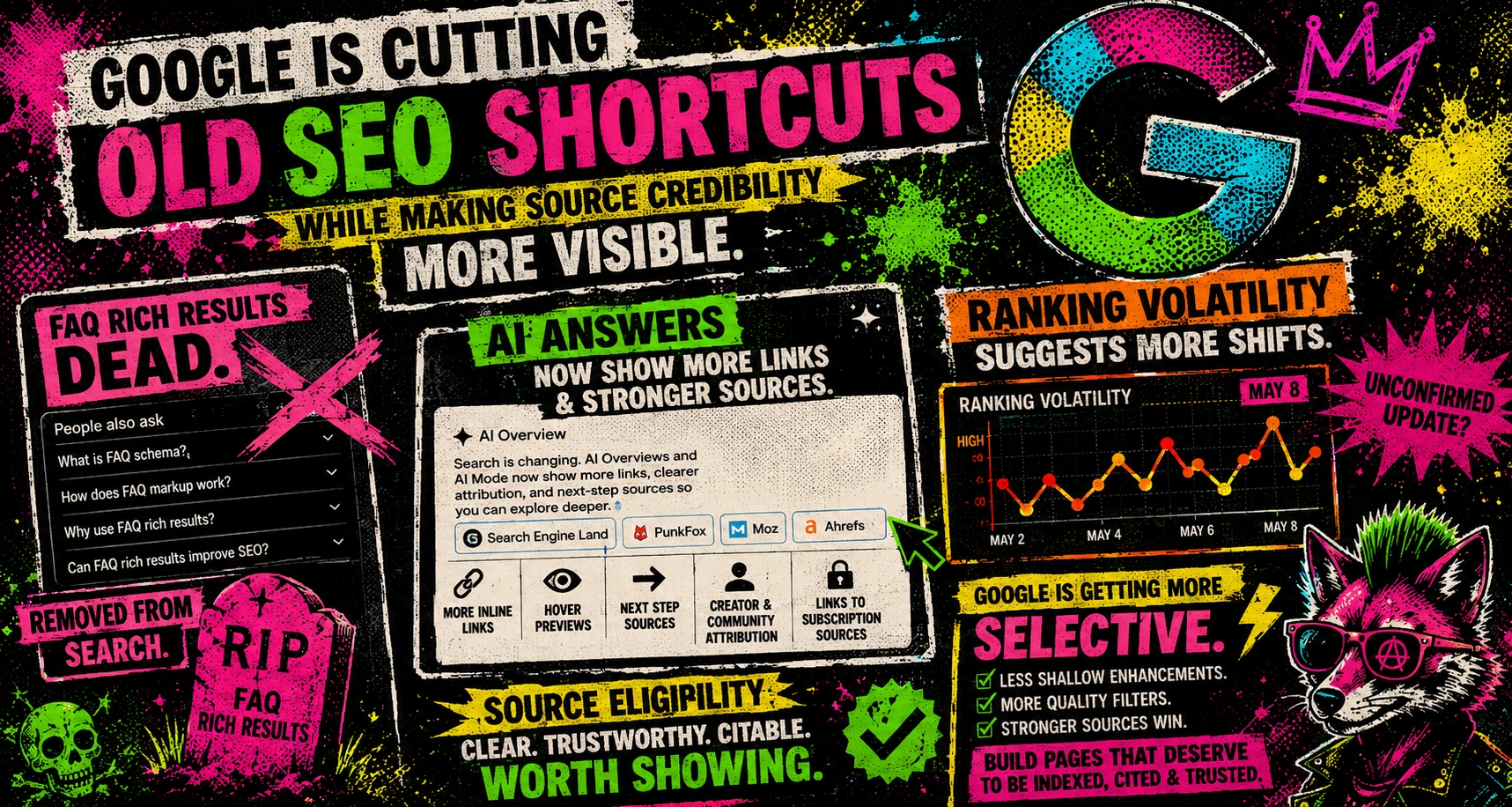
Today’s three strongest SEO developments all point in the same direction. Google is getting less interested in shallow search enhancements and more interested in whether a source is worth showing, citing, and trusting. The clearest sign is the official end of FAQ rich results, followed closely by Google expanding links and attribution inside AI Overviews and AI Mode, while fresh ranking volatility suggests the wider search results are still shifting underneath it all.
Google has officially killed FAQ rich results.
Google has now confirmed that FAQ rich results stopped appearing in Search from 7 May 2026. It is also retiring the related Search Console reporting, Rich Results Test support, and API visibility over the following months. That matters because the FAQ schema has stayed in a lot of SEO workflows long after its real value started fading. For many sites, it became a habit rather than a useful competitive edge.
The broader lesson is that Google is still willing to remove search features once they stop serving its goals. For businesses and agencies, that means old SEO checklists need pruning. Not every markup tactic deserves to survive just because it used to work.
Action:
Audit where FAQ schema is still live. Keep it only where it improves page structure or usability, not where it is hanging around as a dead SERP play. Then move that time and attention into pages that can still earn clicks, links, or citations.
Google is making AI search more citation-friendly and more source-aware.
Google has rolled out five updates to how links and sources appear inside AI Overviews and AI Mode. These include more inline links, desktop hover previews, suggested next-step sources, clearer creator and community attribution, and links to subscription sources where relevant. That is not a small design tweak. It is Google showing much more openly that AI answers are meant to be supported by visible evidence, not just presented as a finished block of text.
This matters because AI visibility is starting to look less like classic ranking and more like source eligibility. A page now has to be clear enough, trustworthy enough, and recognisable enough to be cited inside the answer itself. That puts more pressure on expertise, distinctiveness, and off-site recognition.
Action:
Start treating citation-worthiness as a content goal. Create pages that answer clearly, show obvious expertise, and are easy for Google to reference with confidence. If your content is hard to quote, hard to verify, or hard to distinguish from everyone else’s, it becomes easier to ignore.
Fresh ranking volatility suggests Google is still adjusting the wider results.
Search Engine Roundtable reported renewed ranking volatility on 8 May, with multiple tracking tools showing movement and early SEO chatter flagging unusual shifts. Google has not confirmed a new update, so this should not be treated as a named rollout. But it is still useful. When volatility rises across several tools at once, it usually means something real is moving, even if Google never labels it.
For businesses, the bigger point is that search remains unstable enough that weak pages, low-differentiation content, and shaky site sections are still exposed. Even if no major update is announced, Google’s systems do not stop reassessing what deserves to stay visible.
Action:
Treat the next few days as a monitoring window, not a panic window. Separate branded and non-branded terms, compare page types, and look closely at where movement is actually happening. If weaker sections are dropping first, that is usually your clearest signal about what needs attention.
Website search interface showing FAQ rich results disappearing, AI answers displaying stronger source links, and ranking movement creating a more selective search environment.
PunkFox Take
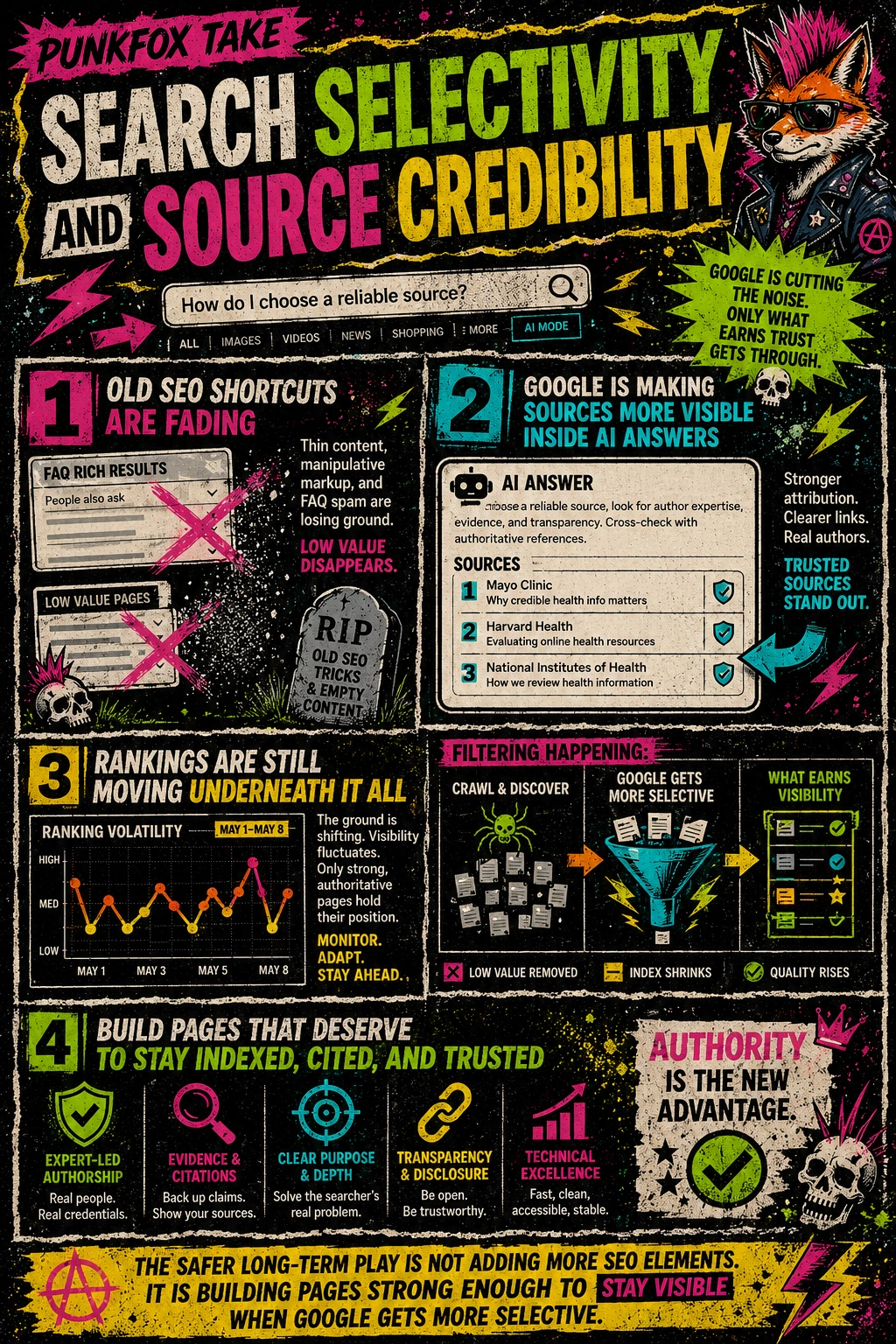
For a long time, SEO could get away with small enhancements and easy wins; that gap is narrowing.
Google is stripping out some of the old shortcuts, making sources more visible inside AI answers, and continuing to move the rankings around underneath it all.
That means the safer long-term play is no longer “add more SEO elements.”
It is built pages that deserve to stay indexed, deserve to be cited, and still hold up when Google gets more selective.