Published on May 25, 2026
SEO Daily Update: May 25, 2026
By Ben Murphy
Google Is Rebuilding Search Before The Click
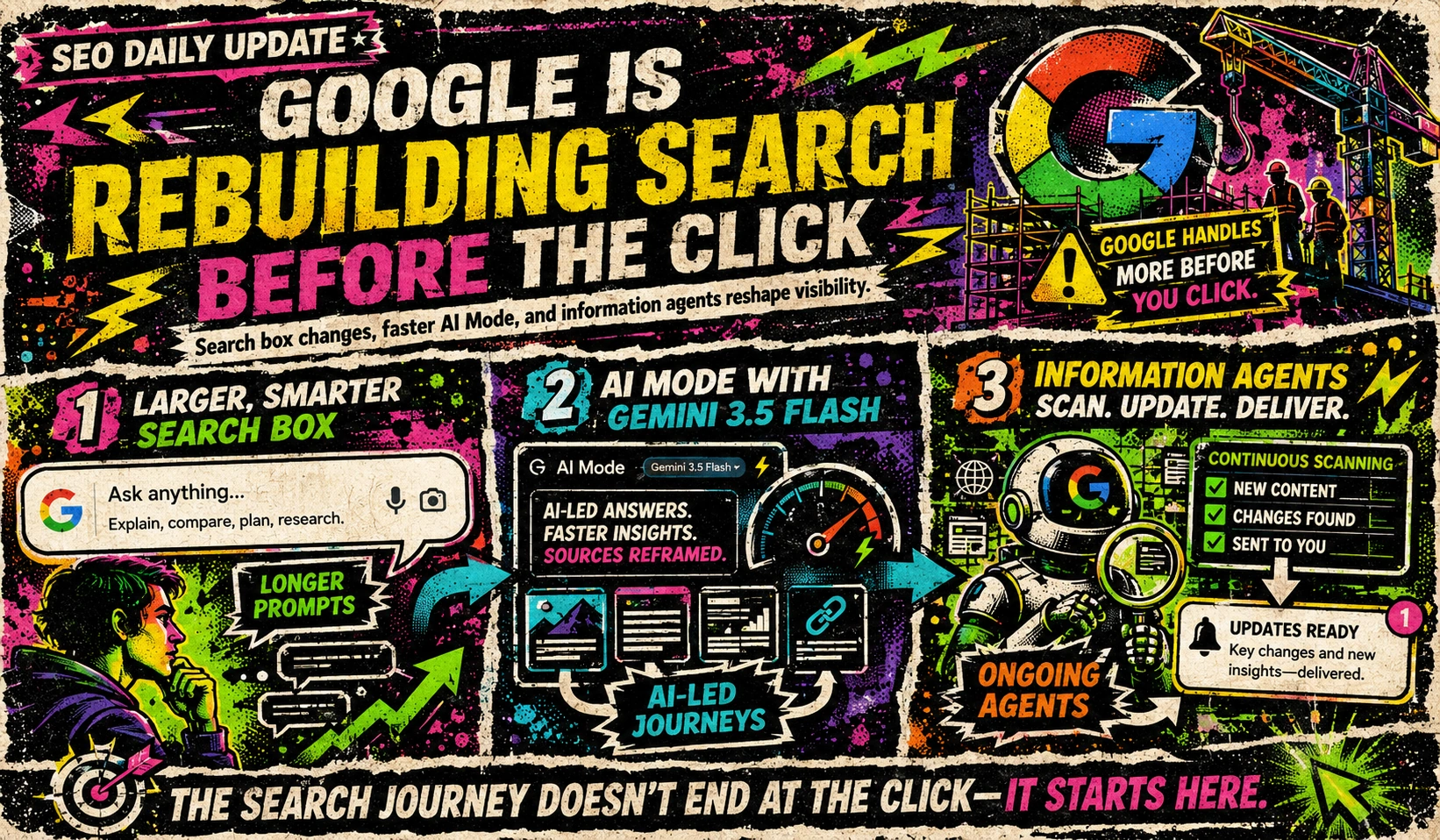
The strongest search updates from the last several days all point in the same direction. Google is not just changing what appears in search results. It is changing how people begin searching, how long they stay inside Google, and how much of the decision-making journey gets handled before a website visit even happens. The clearest signal is Google’s new intelligent Search box, backed by Gemini 3.5 Flash in AI Mode and new information agents that keep scanning the web and sending updates back to users.
Google’s new Search box is quietly changing query behaviour.
Search Engine Land described Google’s new intelligent Search box as the biggest change to the search box in 25 years. The update gives users more room for longer prompts, makes multimodal input more natural, and lowers the friction between typing a query and moving into AI Mode. That sounds cosmetic on the surface, but it is not. The shape of the search box affects the shape of the searches people make.
That matters because traditional SEO has long relied on fairly predictable search behaviour. Shorter queries, clearer keyword patterns, and a cleaner split between informational research and commercial intent. If Google is making it easier for people to search with longer, more contextual prompts, that changes what content gets surfaced and how the journey begins. It also means more users may enter AI-led results before ever engaging with the classic blue-link experience.
Action:
Review your important pages as if the user is arriving with a fuller, messier, more human question than before. If your content only works for narrow keyword targeting, it will become easier to bypass as Google nudges users into longer prompt behaviour.
AI Mode is getting faster and stronger underneath the surface.
Google Search’s AI Mode is now powered by Gemini 3.5 Flash. That matters because model upgrades do not just make answers faster. They can change how information is summarised, which sources are selected, and how often users feel satisfied without clicking through. When Google improves the model behind AI Search, it changes the feel of visibility even if rankings themselves do not visibly move.
This is where a lot of businesses may get caught out. Stable rankings do not necessarily mean stable SEO anymore. A page can still rank, still be indexed, and still lose practical value if Google is answering more of the journey itself or selecting other sources to support AI responses. Ranking, presentation, citation, and recommendation are no longer the same thing.
Action:
Do not judge search performance only by position. Watch how your pages are being cited, framed, or bypassed in AI-driven experiences. If rankings stay steady but clicks, impressions, or lead quality shift, treat that as a visibility problem, not just a reporting anomaly.
Search is becoming more agentic and less one-click.
Google’s new information agents push the shift even further. Instead of waiting for a user to run the next search, Google is building systems that keep scanning the web and return with updates tied to a task or need. That is a much bigger change than another AI feature in the results page. It suggests Google wants search to behave more like an ongoing workflow layer than a list of results.
For businesses, this matters because it changes the competitive frame. You are not just fighting to win one search anymore. You are fighting to remain useful inside a longer Google-controlled process. That raises the value of freshness, completeness, structured usefulness, and pages that help with changing or ongoing decisions rather than just answering one narrow question.
Action:
Think about whether your key pages are useful once or useful repeatedly. If Google is revisiting sources during a longer decision journey, the pages most likely to win will usually be the ones that stay current, answer follow-up questions clearly, and help users act rather than just browse.
Website search interface showing a larger intelligent Search box, AI-led answer journeys, and Google information agents turning one-off searches into ongoing workflows.
PunkFox Take
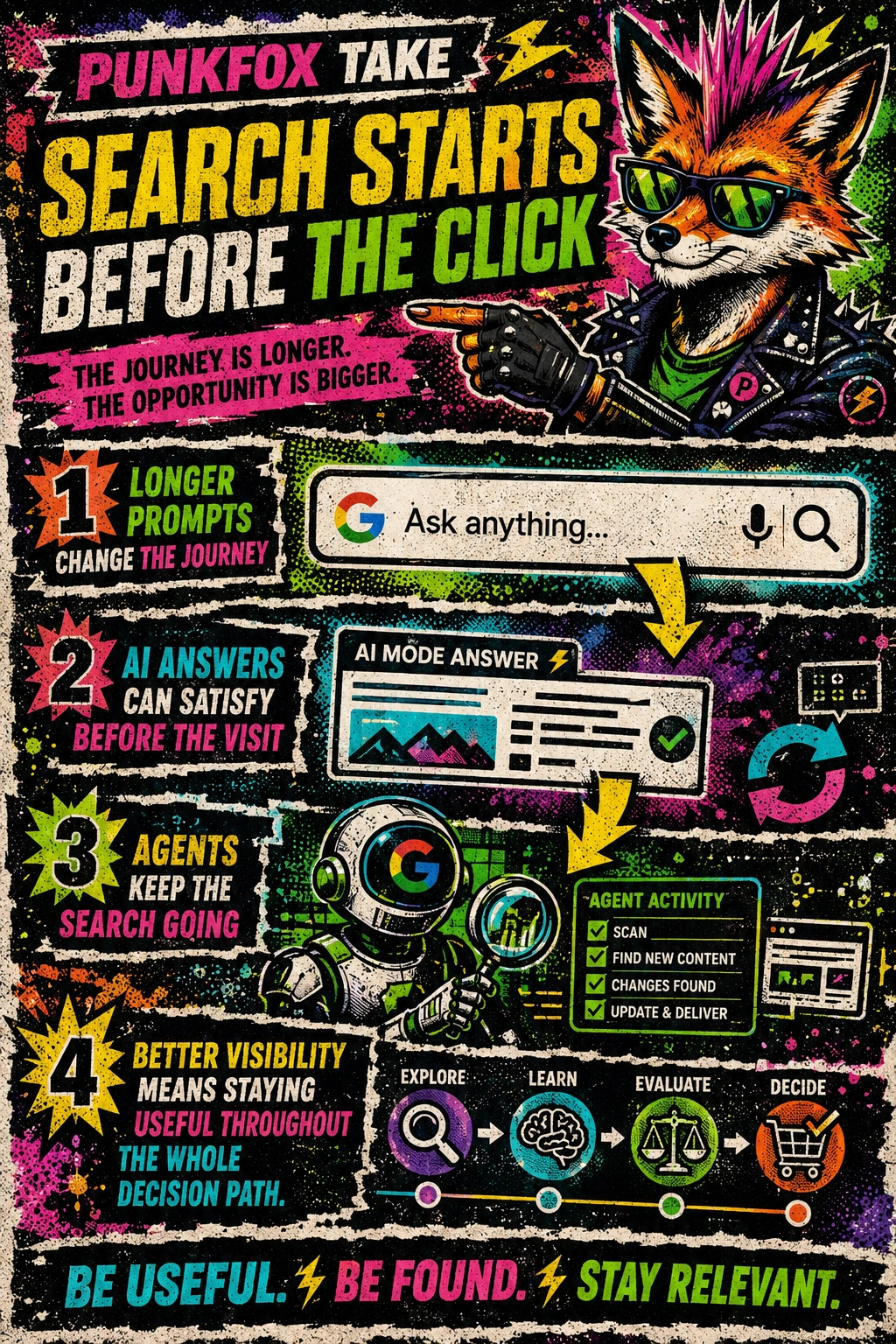
The old version of SEO assumed the search happened, then the click happened, then your website got its chance. That model is getting weaker.
Google is changing how the search begins, how the answer is framed, and how long the user stays inside its own environment before deciding whether your site is worth visiting at all.
That means the next SEO advantage is not just better rankings.
It is being useful early enough, clearly enough, and consistently enough to survive a search journey that now starts inside Google and may spend a lot longer staying there.