Published on February 9, 2026
February 2026 Discover Core Update
By Ben Murphy
Google Launches the February 2026 Discover Core Update
Google has begun rolling out a Discover-specific core update for February 2026, and this one hits differently.
This is not a Search update. Your rankings can stay perfectly stable while Discover traffic collapses. For many businesses, that means leads dry up before anyone realises why.
Discover is where unaware prospects find you. It is your digital shopfront, not your checkout. When visibility disappears there, Google has effectively stopped introducing you to new customers.
If your traffic dipped and your rankings did not, this update is likely the reason.
What Actually Changed in Discover
Google Discover has always worked on recommendation, not queries. With this update, Google is raising the bar on what it is willing to recommend.
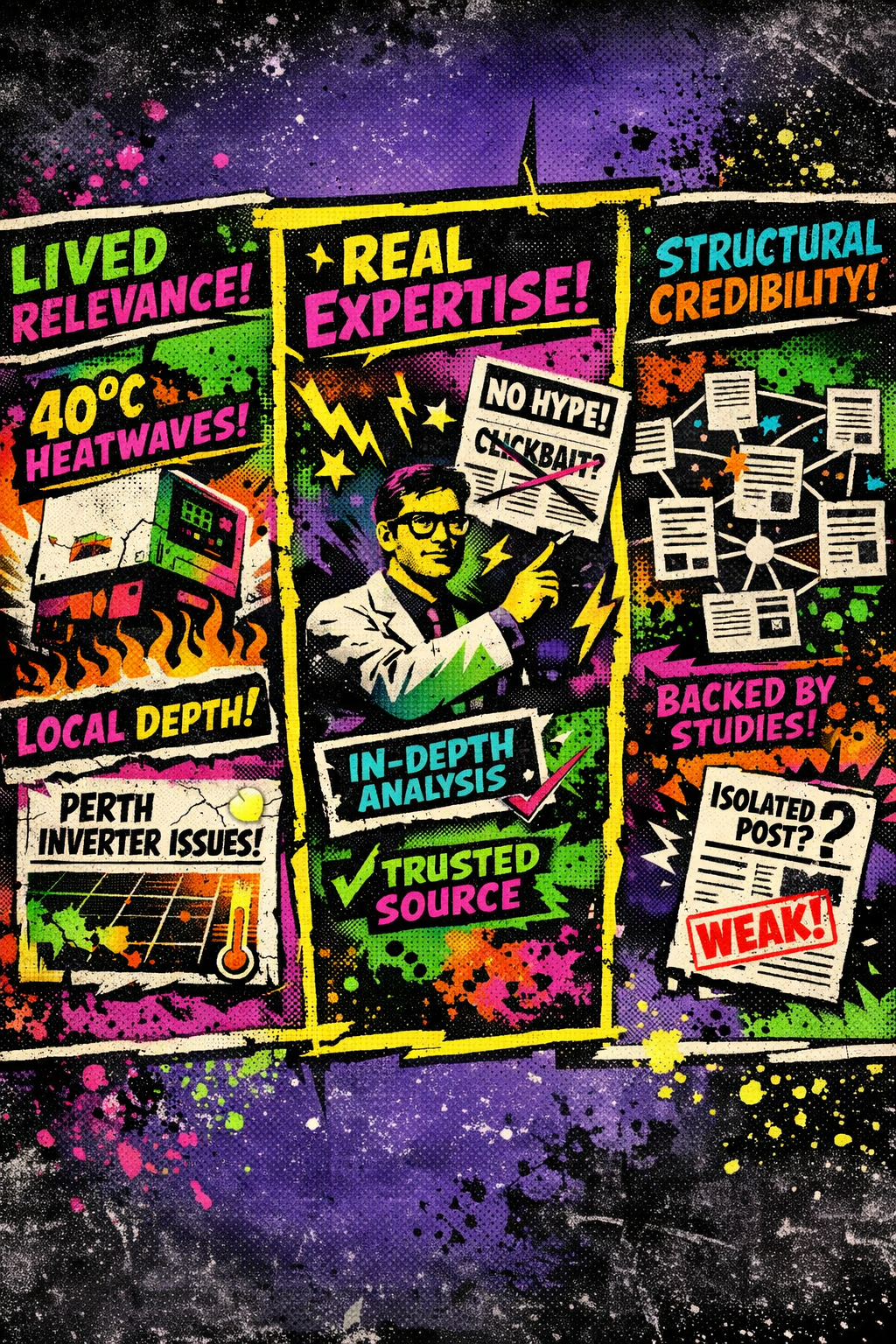
Three signals are being aggressively re-weighted.
First, contextual and local depth. Content now needs to demonstrate lived relevance, not just topical relevance. An article titled “The Best Solar Panels” is no longer enough. An article explaining how Perth’s repeated 40 degree heatwaves degrade specific inverter brands over time is.
Second, expertise over excitement. Sensational headlines that promise insight but deliver surface-level commentary are being filtered out. Discover is no longer rewarding curiosity alone. It is rewarding authority before curiosity.
Third, structural credibility. Google is looking at whether your content is supported by a wider body of expertise or whether it exists in isolation. One-off posts with no topical reinforcement are being deprioritised.
This update is not about writing longer content. It is about proving you actually know what you are talking about.
The Commercial Impact Most Businesses Miss
When Discover traffic drops, teams often treat it as a marketing issue. In reality, it is a revenue issue delayed by a few weeks.
Discover feeds introduce your brand to people who were not searching for you yet. That awareness compounds into branded search, enquiries, and repeat exposure.
When Discover disappears, Google has stopped vouching for you.
You are still open for business, but your shopfront is boarded up.
How to Confirm You Were Hit
You do not need to guess.
Go to Google Search Console. Switch to the Discover report. Look at impressions around mid February 2026.
If Discover impressions fell sharply while your Web Search performance stayed flat, you have been context clipped. Google has decided your content is acceptable for answers, but not worthy of recommendation.
That distinction matters.
Search rewards usefulness. Discover rewards trust.
Why Local Specificity Now Matters More Than Ever
Generic content is being treated as a commodity.
Discover now favours content that proves proximity to the problem. That can be geographic, industry-based, or experiential.
Mentioning Perth is not enough. Referencing the Northbridge hospitality scene, St Georges Terrace corporate demand, or WA-specific compliance realities creates contextual signals that generic competitors cannot fake.
This is how Google distinguishes between someone who writes about a topic and someone who lives inside it.
Discover Versus Search Is a Visibility Gap
Search is reactive. The user asks, Google answers.
Discover is proactive. Google introduces.
When you appear in Discover, Google is effectively saying this source is worth your attention before you even know you need it.
Losing Discover visibility means losing that endorsement.
That is why this update matters even if your rankings look fine.
Why One-Off Articles Are Being Purged
This update exposes a structural weakness in most content strategies.
Standalone articles have no backup.
When Google questions their value, there is nothing reinforcing them. No surrounding expertise. No supporting context. No proof of ownership.
This is exactly why we build topical authority clusters.
Topical Authority Clusters
Clusters show Google that a topic is not a campaign. It is infrastructure. They prove that your insight is repeatable, consistent, and earned.
Discover now heavily favours this kind of structure.
How to Respond Without Making It Worse
Do not tweak headlines. That is 2024 thinking.
If your response is to make content punchier or more dramatic, you are moving in the wrong direction.
To regain Discover visibility in 2026, you need to over-invest in expertise.
Ask one hard question of every Discover-eligible article.
Can this be summarised by a basic AI prompt, or does it contain data, insight, or experience that the model does not already have?
If it is the former, it does not belong in Discover.
If it is the latter, protect it, reinforce it, and build around it.
Refinement beats reaction.
The Bigger Signal Behind This Update
The February 2026 Discover Core Update is not isolated. It is part of a wider tightening across all recommendation surfaces.
Google is reducing tolerance for content that exists to fill space. Discover is now a trust surface, not a traffic bonus.
If your strategy is built on owning topics rather than chasing headlines, this update works in your favour.
If your strategy relies on attention spikes, those spikes will continue to disappear.
Discover is no longer about being interesting.
It is about being worth recommending.
And that is the game most businesses are still playing too late.