Published on December 12, 2025
December 2025 Google Core Update
By Ben Murphy
The December 2025 Google Core Update
What Agencies and Clients Need To Do Now
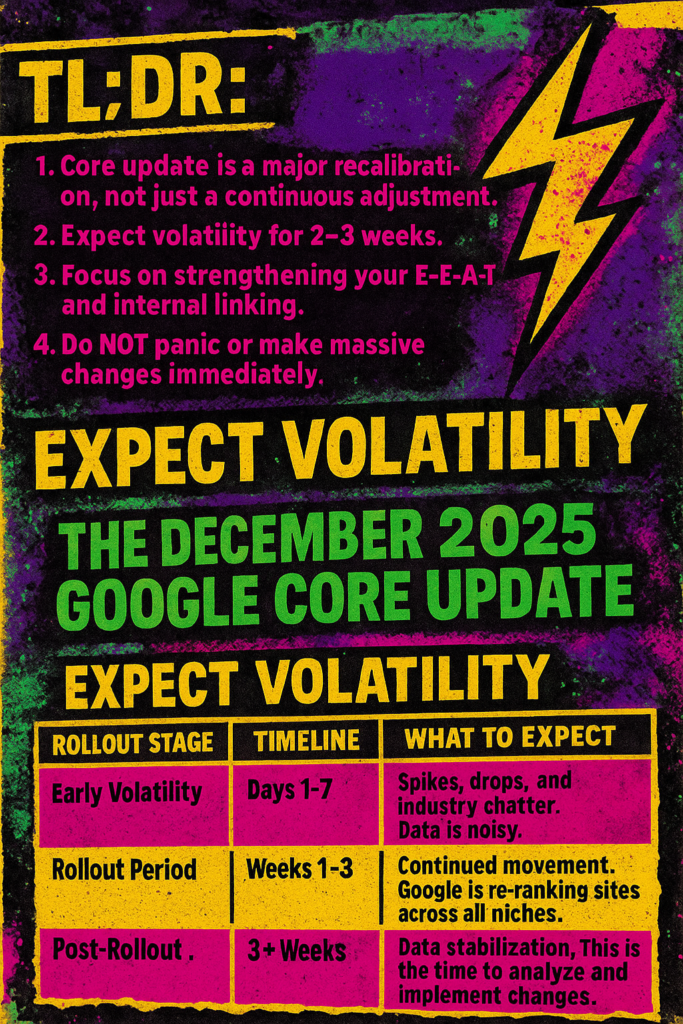
If rankings have felt unsteady this week, you are not imagining it. Google has released the December 2025 Core Update. This is the third major update of the year, and early signs show movement across a wide range of industries. While Google has shifted toward continuous background updates, a named core update still brings a deeper recalibration of how content is evaluated and ranked.
As an SEO agency, we track thousands of keywords across our client portfolio every day. This gives us a clear view of how different sectors respond during these early stages. The most significant movement so far has appeared in competitive service based industries and comparison focused search results, which tend to be more sensitive during broad algorithm adjustments.
This overview explains what the update means, who is affected, and what you should do next.
What a Core Update Means in 2025
A core update is a large-scale adjustment to Google’s ranking systems. It influences how Google interprets content quality, intent alignment, authority, user satisfaction, and trust. These factors already matter throughout the year, but during a core update, the weight of each signal is reassessed. This is why rankings can change suddenly, even for websites that have been stable for months.
Google has confirmed that it now releases smaller updates continuously. Our article on continuous core updates explains that shift well. A named core update, however, still represents a more substantial change and can reshape large sections of the search results.
Why Google Has Released This Update Now
Google often uses the final months of the year to refine ranking systems, reassess signals, and prepare for the direction of search in the coming year. With AI playing a greater role in how search results are generated, Google is placing more importance on clarity, relevance, topical authority, and genuine experience.
Websites that consistently publish helpful, well-structured content backed by real expertise tend to experience greater stability during major updates. Outdated content or surface-level pages are more likely to lose visibility.
Expect Volatility Over the Next Two to Three Weeks
Our internal monitoring shows higher than usual volatility across both national and local rankings. Some websites experienced movement before the official announcement, which is common when Google tests components ahead of a rollout. E-commerce, home services, finance, travel, and comparison-based searches are showing the strongest early shifts.
Local search results, including map pack rankings, are also moving. This often happens when Google reassesses intent signals for location-based queries. If your business relies on local visibility, monitor your rankings regularly over the next fortnight and make sure your Google Business Profile information remains consistent, accurate, and up to date. Local pack performance can be highly sensitive during core updates.
Who Is Most Affected
A core update can influence nearly every type of website, although some categories feel the effects more quickly.
Local businesses often notice changes sooner. This is because Google adjusts its interpretation of local intent during major updates. Even strong performers can see shifts while the rollout progresses.
Content-heavy websites also experience noticeable movement. Blogs, guides, and editorial sites are evaluated more strictly on depth, originality, and usefulness. Outdated or thin content tends to lose ground.
Websites relying heavily on AI-generated content without editorial oversight may find that unique, experience-driven content is outperforming generic writing. Google continues to prioritise material that demonstrates human understanding and real involvement with the subject matter.
What To Do Now
Avoid reacting too quickly. Begin by reviewing performance at a page level. Look at impressions, clicks, engagement, keyword movement, and whether shifts occurred across categories or only specific themes. This helps identify whether the change is part of normal volatility or related to deeper issues.
The following advice should put your mind at ease although, if you do require help or just want peace of mind, contact our SEO agency in Perth directly and one of our team can offer guidance.
Review your highest value pages with a focus on intent and authority
Start with the pages that matter most to your business. Confirm that they still satisfy the search intent they are targeting. Review the quality and clarity of the content and compare it with competitors that have recently gained visibility. This is also the time to look at topical authority. A strong core page should be supported by related articles, internal links, and a clear content structure that reinforces your expertise across the broader topic.
Strengthen E E A T signals
Core updates often highlight the importance of experience, expertise, authoritativeness, and trust. Improve author bios, add credentials, include real case studies, update outdated examples, and ensure your content shows practical knowledge. These signals help Google confirm that the page is written by someone with genuine experience in the topic.
Improve internal linking across topic clusters
Internal linking is one of the fastest ways to reinforce your topical authority. Link foundational guides to relevant service pages. Use supporting articles to strengthen your main commercial pages. Ensure navigation paths make sense to users and to Google. A well-organised internal linking structure helps Google understand how topics are grouped and which pages should carry the most weight.
Refresh older content
You do not always need a full rewrite. Simple updates such as refining explanations, adding newer examples, answering additional questions, updating dates, or improving structure can be enough to show Google that the page remains relevant.
Monitor daily and act weekly
As an agency, we monitor thousands of keywords each morning across our entire portfolio. Daily tracking helps us identify early trends, but decisions are made weekly because core updates take time to settle. Activity during the first few days is often only the beginning. Making changes too quickly can make it harder to measure what is actually happening.
What Not To Do
Do not delete pages, remove entire sections, or rewrite your whole site without data. Avoid buying quick links or reacting out of frustration. Temporary dips are common and do not always indicate a long-term issue. Strategic adjustments based on clear evidence always deliver better outcomes.
Final Thoughts
Core updates are designed to refine Google’s understanding of which content deserves stronger visibility. Although they can cause short-term fluctuations, they reward websites that focus on clarity, usefulness, and genuine expertise.
By monitoring performance carefully, reviewing your most important pages, improving your topical authority, and strengthening internal linking, you place your website in a stronger position for the months ahead. If you would like help reviewing your site or want a detailed breakdown of how this update affects your industry, we can prepare a personalised analysis based on the data we are tracking each day.
If you need help navigating these updates or simply wish to seek advice, please get in touch. You can book your free video audit today or contact our team directly on 08 6558 1890.